A few years ago, most smart home technology felt like a novelty. Now it's becoming a normal part of everyday life. From video doorbells and smart speakers to connected thermostats and appliances, more and more households are starting to rely on internet connected devices than ever before. In fact, many new devices are being built with internet connectivity in mind from the very start of their conception.
But as the number of connected devices in our homes grows, so does the demand on our internet connection.
A smart home is only as smart as the network supporting it. If the devices are slow to respond, are frequently disconnect, or struggle to communicate with each other, the experience to the user quickly becomes frustrating.
That's the reason why more homeowners are beginning to turn to high speed fiber internet. As smart homes become more sophisticated, reliable internet connectivity is no longer a luxury, it's an essential part of making everything in your home work without flaw.

Why smart devices need reliable internet
Many smart home devices operate quietly without notice in the background. A smart thermostat adjusts temperature based on the schedule you give it, security cameras upload footage to the cloud for you to access where you need it, and a smart doorbell sends an alert to your phone when someone approaches at your door.
Individually, these tasks may not seem all that demanding, but when dozens of devices are connected at the same time, the amount of upload data moving across your internet network can increase by a lot.
Unlike older internet technologies, FTTH (fiber-to-the-home) provides the speed and capacity needed to support multiple connected devices without giving up performance.
The result is a smoother surfing experience where devices respond quickly, remain connected, and work as intended.
Supporting smart security systems
Connected technology has the most impact in day-to-day life for many homeowners in the area of smart security. Whether it's checking who's at the front door while you're at work or receiving an alert when movement is detected outside your home, these systems rely on a fast and reliable connection.
Spotty internet service can prevent security devices from sending alerts promptly or uploading video when you need it. But with local fiber internet, homeowners benefit from fast, dependable connectivity that helps ensure security systems remain responsive when they matter most.
It’s the constant connection that makes all the difference, whether you’re checking a live camera feed or receiving an instant alert from your doorbell.

Keeping automation running smoothly
One of the biggest advantages of a smart home is automation.
Lights can be automatically turned on when you enter a room. Thermostats can adjust temperatures on your schedule and you can open and close smart blinds during the day.
These systems require constant communication between devices, apps, and cloud-based platforms.
If there is a delay in connectivity, automation can become less reliable. Commands might take longer to process, devices may fail to respond, and routines may not run as expected.
Fiber helps overcome many of these problems by providing the low-latency connection needed to communicate with each other in real time.
The result is a smart home that feels effortless rather than unpredictable.
Helping voice assistants work better
Many connected homes have become a hub for voice assistants.
Whether it’s for a weather update, to turn off the lights, play music or check your calendar, voice commands depend on quick communication with cloud-based services. If your connection is slow or unreliable, there can be significant lag between issuing a command and the response.
With smart home internet through fiber, voice assistants can respond to requests quickly and reliably, which makes for a more natural, convenient experience.
Supporting connected appliances
Smart home technology now extends far beyond speakers and lighting.
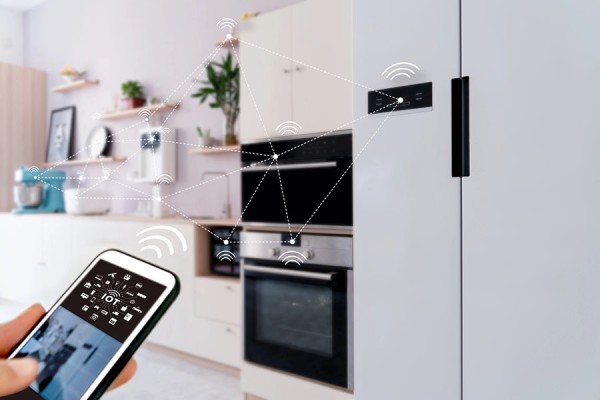
Modern appliances can send maintenance alerts, tell homeowners when cycles are finished, and even be operated remotely. Refrigerators, washing machines, ovens, and robotic vacuums increasingly depend being connected to unlock their full functionality.
As more appliances get connected, the number of devices fighting for bandwidth increases.
A fiber internet package has the bandwidth needed to support this growing ecosystem without weighing down other things going on throughout the home.
Managing multiple devices at once
Today's households are going to have multiple connected devices. Between smartphones, tablets, laptops, streaming services, gaming consoles, smart TVs, cameras, speakers, and automation systems, it's common for dozens of devices to be online at the same time.
Older internet technologies weren't designed for dozens of connected devices all competing for bandwidth at the same time. Fiber is uniquely positioned to handle these environments because it offers greater bandwidth and consistency than many alternative technologies.
For families looking for reliable internet for connected homes, fiber provides the foundation needed to support modern digital lifestyles without constant interruptions.
Future-proofing your home
Most people don't stop at one or two smart devices. A video doorbell often leads to security cameras. A smart speaker becomes the hub for lighting, heating, and entertainment systems. Before long, the number of connected devices throughout the home starts to add up.
Choosing fiber is not just about supporting your current devices, it's about making sure your home is ready for future technologies.
With high speed fiber internet, homeowners can confidently expand their smart home technology without worrying that their connection will become slow.
Why fiber is becoming the smart home standard
The more connected devices you add to your home, the more important your internet connection is going to become. Because when a smart thermostat, video doorbell, security camera, and voice assistant are all working, they're also constantly communicating in the background using the internet. Without a reliable connection, the experience quickly becomes laggy.
As more households embrace automation and connected living, fiber is increasingly becoming the preferred choice for the modern user.
At Conexon Connect, we're proud to provide local fiber internet that supports today's smart homes and tomorrow's innovations!
Ready to get more from your connected home? Discover how fiber can help every device in your home work better together.
Frequently asked questions
1. What is the best internet type for a smart home?
Fiber internet is widely considered the best option for smart homes because it provides fast speeds, low latency, and the capacity to support multiple connected devices simultaneously.
2. How many smart devices can fiber internet support?
The exact number depends on your equipment and usage, but fiber networks can comfortably support dozens of connected devices without the performance issues often experienced on older technologies.
3. Do smart home devices use a lot of bandwidth?
Many individual devices use relatively small amounts of bandwidth. However, security cameras, video doorbells, streaming devices, and multiple connected systems can add up quickly, making a reliable connection important.
4. Why is low latency important for smart homes?
Low latency helps devices communicate quickly with cloud services and each other. This improves responsiveness for automation, security alerts, voice assistants, and other connected systems.
5. Will smart devices slow down my internet?
Yes. Fiber not only improves the performance of current devices but also prepares your home for future smart technology additions, helping ensure a reliable experience as your needs grow.